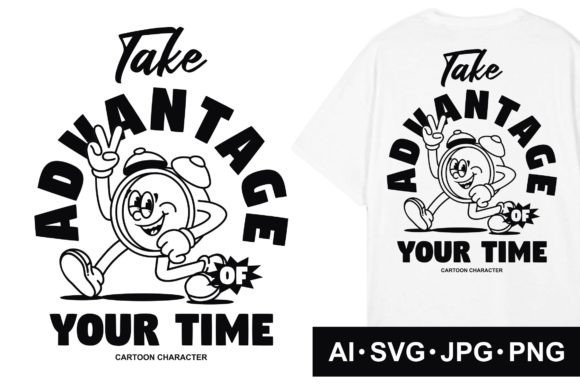
Cartoon Character of Ringing Clock
When I first pulled up the file for Cartoon Character of Ringing Clock, my immediate reaction wasn’t about the technical specs, but about the vibe. As a designer who spends hours staring at stitch paths and worrying about thread tension, it is refreshing to find a graphic that feels less like a rigid vector and more like a genuine illustration. This piece sits squarely in the realm of T-Shirt Designs and Graphics, specifically leaning into that sweet spot of urban, vintage, and retro aesthetics. It’s not just another clip-art clock; it has personality. But the real question for any embroidery enthusiast or small business owner is: does this translate well from a screen to a hoop?
First Impressions and Visual Personality
The design features a cartoon character interacting with a ringing clock, rendered in full color workspaces at 300dpi. That resolution suggests a high-quality source image, which is crucial when we are talking about digitizing or converting this into an embroidery file. The visual weight is balanced—it isn’t overly cluttered, yet it holds enough detail to be interesting. The mood is playful but slightly nostalgic, tapping into that "retro t-shirt design" energy that performs so well on platforms like Etsy.
For me, the strongest element here is the character’s expression and posture. In machine embroidery, you lose a lot of nuance if the original art is too thin or delicate. Here, the lines feel substantial. The theme suggests movement—the act of ringing— which gives the design a dynamic quality. When I look at this, I don’t see a static logo; I see a story. That is exactly what drives engagement in handmade products. Customers don’t just buy a shirt; they buy the feeling the design evokes.
Real-World Application: From Screen to Stitch
Let’s talk about how this would actually look on a finished product. I recently had a client request a custom embroidered tote bag for a local coffee shop event, and while this specific design might lean more towards apparel, the principles apply. Imagine this cartoon character of ringing clock centered on a heavyweight cotton canvas tote. The bold outlines would pop against the natural fabric, and the full-color aspect (if executed with good thread choices) would add a layer of sophistication that simple monochrome designs often lack.
I also see this working exceptionally well as an embroidered patch for denim jackets or backpacks. The urban and vintage styling fits perfectly with the rugged texture of denim. If you are an Etsy seller looking to expand your catalog beyond basic tees, creating patches with this design could be a unique angle. The character offers a focal point that draws the eye, making it ideal for chest-area placements on sweatshirt embroidery projects where you want something distinctive without overwhelming the garment.
Furthermore, consider the holiday embroidery potential. Clocks often symbolize time, change, or new beginnings. While it might not be explicitly Christmas-themed, the retro aesthetic makes it a versatile choice for New Year’s Eve gifts or even graduation merchandise. A personalized gift featuring this clock character could easily be marketed toward young adults moving out, starting a new job, or celebrating a milestone birthday. The versatility here is higher than many designers realize.
Technical Considerations and Fabric Choices
However, no design is perfect for every surface. There are specific scenarios where Cartoon Character of Ringing Clock requires careful handling. First, let’s discuss stitch density. Because this is described as a full-color illustration, there will likely be areas of fill stitch. If you are planning to embroider this on stretchy fabric like thin jersey knits, you need to be extremely cautious. High-density fills can pucker lightweight fabrics, ruining the drape of the garment. For such materials, I would recommend using a tear-away stabilizer and perhaps reducing the stitch density if your software allows, or opting for a simpler outline version if available.
Textured fabrics present another challenge. Embroidering on a chunky knit sweater or a heavily textured linen can obscure the finer details of the character’s face or the clock hands. The fabric texture competes with the design, leading to a muddy final result. For these materials, stick to smooth, tightly woven fabrics like cotton twill or polyester blends where the needle can penetrate cleanly and the threads can lay flat.
Dark fabrics are another consideration. While the design is vibrant, dark backgrounds require underlay stitches to make the top threads pop. If the contrast between the thread colors and the dark fabric is poor, the design will look dull. Always test your thread colors against the actual fabric you intend to use. A bright yellow clock might disappear on a beige background but shine on navy blue.
Where to Use It Carefully
- Small Hoop Sizes: If the design is large, trying to fit it into a mini hoop for a baby item might result in lost details. Check the dimensions before committing.
- Curved Surfaces: While caps are popular, complex curves can distort the circular nature of a clock. Flat surfaces like aprons or pillow covers are safer bets.
- Frequent Washing: For items like kitchen towels or aprons that will undergo heavy laundering, ensure the design is stable. Loose threads or dense areas that rub together can fray over time.
Designer Notes for Success
Before you upload this to your shop or start stitching for a client, follow these practical steps to ensure professionalism:
- Test on Scrap Fabric: Never go straight to the final product. Stitch this on a scrap of the same material to check for puckering, thread breaks, or alignment issues.
- Check Contrast: View your mockup in black and white. If the design loses its shape or readability without color, it may not hold up well in embroidery.
- Review Small Details: Zoom in on the character’s eyes and the clock hands. Are they too fine? If so, you may need to simplify the digitization to prevent thread tangling.
- Confirm Licensing: This is critical for commercial embroidery and digital product sellers. Ensure you have the right to sell physical items made from this design. Do not assume that because it is a graphic for T-shirts, it is automatically cleared for embroidery resale.
- Stabilizer Selection: Use the appropriate stabilizer for your fabric type. Heavy-duty cut-away for stretchy garments, and light tear-away for wovens.
Final Verdict
Cartoon Character of Ringing Clock is a strong contender for anyone looking to add a touch of retro charm to their handmade product line. It bridges the gap between casual streetwear and nostalgic decor, making it appealing to a broad audience. Whether you are creating a custom apparel order for a friend or stocking your small shop product inventory with unique tote bag designs, this graphic offers a solid foundation.
The key to success lies in execution. Pay attention to thread colors, choose the right hoop size, and respect the limitations of your fabric. When done correctly, this design transforms from a simple digital image into a tangible piece of art that customers will love to wear or display. It’s not just about the clock ticking; it’s about the craftsmanship behind it. If you approach this project with care and creativity, Cartoon Character of Ringing Clock will undoubtedly become a standout piece in your portfolio.